If you ask anyone on the street—your barber, a college student, or even a seasoned investor—"What's the most well-known indicator of inflation?", nine times out of ten they'll say "the CPI." They're right. The Consumer Price Index (CPI) is the undisputed headline act, the number that flashes across news tickers and dominates financial discussions. But here's the thing most articles won't tell you: treating the CPI as a perfect, singular truth about rising prices is the first and biggest mistake you can make. It's a tool, and like any tool, its usefulness depends on knowing exactly what it measures, how it's built, and where its blind spots are. I've spent years analyzing economic data, and the confusion around CPI is both widespread and costly for personal financial decisions.
What You'll Learn in This Guide
What Exactly is the Consumer Price Index (CPI)?
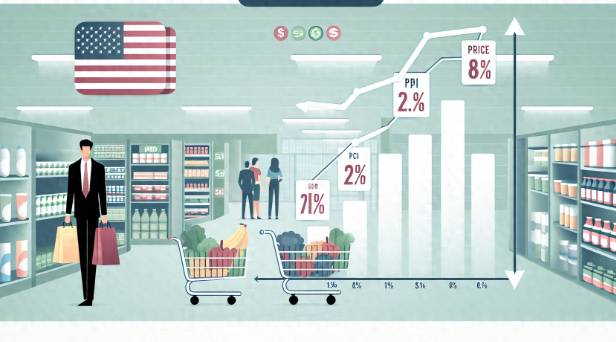
Let's strip it down. The CPI, published monthly by the U.S. Bureau of Labor Statistics (BLS), is essentially a giant, ongoing shopping cart survey. It tracks the average change over time in the prices paid by urban consumers for a market basket of goods and services. Think of everything a typical household might buy: groceries, rent, gas, doctor visits, haircuts, appliances, and even streaming services.
The BLS doesn't just guess what's in this basket. It uses detailed expenditure data from thousands of families to determine the basket's composition and the weight (importance) of each item. Housing costs (called "shelter") typically make up about one-third of the total index, which tells you immediately why housing market trends have an outsized impact on the reported inflation rate.
The process is meticulous. Data collectors physically visit or contact thousands of stores, service providers, and rental units across the country each month to record prices. This raw data is then crunched using a complex formula (a Laspeyres index, for the curious) to produce the final index number you see in the news.
The "Market Basket" Isn't Your Basket
This is the critical nuance. The CPI represents an average urban consumer. Your personal spending habits are almost certainly different. If you're a remote worker who drives rarely, a surge in gasoline prices affects you less than the CPI suggests. If you're a new graduate allocating 50% of your income to student loan payments and rent in a hot city, you might feel inflation is much higher than the official 3%.
The BLS does account for some substitution—if beef gets too expensive, people might buy more chicken—but the adjustment isn't instantaneous or perfectly reflective of real-time behavior. This lag is a common point of criticism.
Why is CPI So Important (and Where Does It Fall Short)?
CPI's fame isn't an accident. It's hardwired into the economy's DNA.
- Social Security & Government Benefits: Annual cost-of-living adjustments (COLAs) for Social Security payments are tied directly to CPI-W (a variant for wage earners).
- Tax Brackets & Thresholds: Many parts of the tax code are indexed to CPI to prevent "bracket creep," where inflation pushes you into a higher tax bracket without a real increase in purchasing power.
- Financial Contracts: Some commercial leases and alimony payments include CPI-based escalation clauses.
- The Federal Reserve's Mandate: While the Fed officially targets the PCE index (more on that below), CPI is a primary data point it scrutinizes when deciding whether to raise, lower, or hold interest rates.
However, its importance is matched by its limitations. Beyond the "not-your-basket" issue, CPI has other well-documented quirks. It struggles to fully capture quality improvements. A laptop today is vastly more powerful than one costing the same five years ago; CPI tries to adjust for this, but it's an imperfect science. It also may underweight rapidly evolving sectors like technology and healthcare innovation. Furthermore, the methodology for measuring housing costs (Owners' Equivalent Rent) is theoretical—it estimates what homeowners would pay to rent their own home—which can feel disconnected from the actual experience of soaring home prices and mortgage rates.
CPI vs. Other Key Inflation Indicators: PPI and PCE
Calling CPI the "most well-known" is accurate. Calling it the "only" or "best" is not. Savvy observers always check the supporting cast.
| Indicator | Full Name | What It Measures | Key Insight It Provides | Primary Publisher |
|---|---|---|---|---|
| CPI | Consumer Price Index | Prices paid by consumers (out-of-pocket costs). | The direct cost-of-living experience for urban households. | Bureau of Labor Statistics (BLS) |
| PPI | Producer Price Index | Prices received by domestic producers (input costs). | Future consumer inflation pressure. Rising PPI often signals higher CPI months ahead. | Bureau of Labor Statistics (BLS) |
| PCE | Personal Consumption Expenditures Price Index | What consumers actually buy, including what others pay for them (e.g., employer health insurance). | Broader consumption patterns. The Federal Reserve's preferred gauge. | Bureau of Economic Analysis (BEA) |
Why does the Fed prefer PCE? Two main reasons. First, it has a broader scope. If your employer pays more for your health insurance, that doesn't show up in your CPI basket (it's not an out-of-pocket cost), but it does in PCE. Second, its formula allows for more dynamic substitution—if people suddenly switch from buying cars to subscribing to ride-share services, PCE captures that shift faster. In practice, CPI and PCE usually tell a similar story, but their paths can diverge meaningfully.
Ignoring PPI is another common error. It's a leading indicator. If the prices for lumber, steel, and wholesale energy are shooting up, it's only a matter of time before those costs filter down to the retail level. Watching PPI gives you a glimpse around the corner.
How to Actually Use Inflation Data in Your Financial Life
So, you see the CPI report came in at 3.4%. What now? Here’s how to move beyond the headline.
For Personal Budgeting: Don't just use the national CPI. Look at the breakdowns. The BLS publishes CPI for specific categories (food at home, energy, apparel) and for major metropolitan areas. If you live in Miami, the Miami-Fort Lauderdale CPI is more relevant to you than the U.S. city average. Use these detailed numbers to stress-test your budget. If "food at home" is rising at 5% annually, you know you need to adjust your grocery spending projections.
For Salary Negotiations: When asking for a raise, citing the headline CPI is a good start, but it's basic. Strengthen your case by referencing the CPI component that most closely matches your spending—often "services less energy services," which includes things like rent, medical care, and education, and has been particularly sticky. Argue that to maintain your standard of living, your compensation must at least keep pace with the inflation in the costs that define it.
For Investing: This is where the trio matters. A rising PPI with stable CPI might suggest corporate profit margins are getting squeezed—a caution for stock pickers. The Fed's focus on PCE means bond and interest-rate sensitive investors should watch that number closest. I've seen too many investors react only to the CPI print without considering the broader picture from PPI and PCE, leading to poorly timed decisions.
The real power comes from watching the trend across all three, not obsessing over a single month's figure. Is PPI cooling while Core CPI remains elevated? That suggests pipeline pressures are easing, which could be a positive signal for future inflation.
Your Top Inflation Indicator Questions, Answered
If CPI is rising, does that mean everything is getting more expensive?
No, and this is a crucial distinction. CPI is an average. In any given month, some categories go up (like auto insurance) while others may go down or stay flat (like used cars or electronics). The headline number blends these together. Always look at the category breakdowns to understand what's actually driving the change.
Which is more accurate for me, CPI or PCE?
For your personal cost-of-living feeling, CPI is usually closer because it's based on out-of-pocket expenses. If you pay for your own health insurance, CPI's treatment aligns with your reality. However, if you want to understand the broad economic forces that guide Federal Reserve policy—which ultimately affects your mortgage and loan rates—then PCE provides the wider lens the Fed uses.
Why do I feel like inflation is higher than what the CPI reports?
You're probably not imagining it, and it's not just "perception." There are solid reasons. First, you likely spend a higher proportion of your income on categories experiencing above-average inflation (housing, services) and less on categories with low or falling prices (like goods). Second, you notice frequent purchases (gas, food) more than infrequent ones. Third, the CPI's formula for housing (Owners' Equivalent Rent) can lag behind real-time surges in rent and home prices. Your personal inflation rate can easily be 1-2 percentage points above the headline number.
Should I wait for low inflation before making a big purchase?
Trying to time the market based on monthly CPI prints is a fool's errand. For a big purchase like a car or appliance, focus on the specific item's price trend and the financing cost (interest rates). If inflation is high, the Fed may keep rates high, making loans expensive. Sometimes, paying a slightly higher sticker price with a much lower interest rate is better than the reverse. Use inflation data to inform the environment, not to pinpoint the purchase day.
The Consumer Price Index deserves its fame as the most well-known inflation indicator. It's a vital, deeply embedded economic thermometer. But real understanding—the kind that protects your wallet and informs smart decisions—comes from knowing it's just one reading. You need the context of PPI and PCE, a deep dive into its components, and an acknowledgment of its inherent limitations. Don't just read the headline. Read the whole story.

Leave a Comment