Let's be honest. Buying stocks feels great. Selling them for a profit feels terrifying. You watch the price climb, excitement builds, and then a little voice whispers: "What if it goes higher?" So you hold. And hold. Then the market turns, and those beautiful paper gains evaporate. I've been there. Early in my investing career, I watched a 50% gain on a tech stock dissolve into a 10% loss because I had no plan for taking profits. I was hooked on the potential of "more." That's the trap.
Taking profit isn't about market timing or being a genius. It's about having a pre-defined plan and the discipline to execute it. This guide cuts through the noise. We're not talking vague theories. We're talking concrete steps, specific strategies, and the psychological tweaks you need to actually lock in gains and build real wealth from your stock investments.
What You'll Learn
The Profit-Taking Mindset: Why It's Harder Than Buying
Before we get to the "how," we need to fix the "why not." The biggest barrier to taking profit is psychology. Behavioral finance experts like those at the Investopedia Behavioral Finance section point to two main culprits: greed and loss aversion.
Greed is obvious. Loss aversion is sneakier. It's the idea that the pain of losing $100 hurts more than the pleasure of gaining $100. When your stock is up, selling feels like you're "losing" the chance for future gains. Your brain frames it as a loss, even though you're booking a real cash profit.
Here's the shift: Stop thinking of your investment as a ticker symbol with unlimited potential. Start thinking of it as a business transaction. You deployed capital with a thesis. When that thesis plays out to a satisfactory degree, you conclude the transaction and reclaim your capital plus a reward. That's it. The goal isn't to sell at the absolute peak—an impossible task—but to sell at a good price, consistent with your plan.
Three Concrete Profit-Taking Strategies to Lock in Gains
You need a system, not a feeling. Here are three actionable frameworks. Pick one and tailor it.
| Strategy | How It Works | Best For | Potential Drawback |
|---|---|---|---|
| 1. The Percentage-Based Scale-Out | Sell predetermined portions of your position at specific gain milestones. Example: Sell 1/3 at +25%, another 1/3 at +50%, let the final 1/3 run with a trailing stop. | Growth stocks, volatile sectors. Lets you secure profits while staying in the game. | Can limit upside in a massive, sustained rally. |
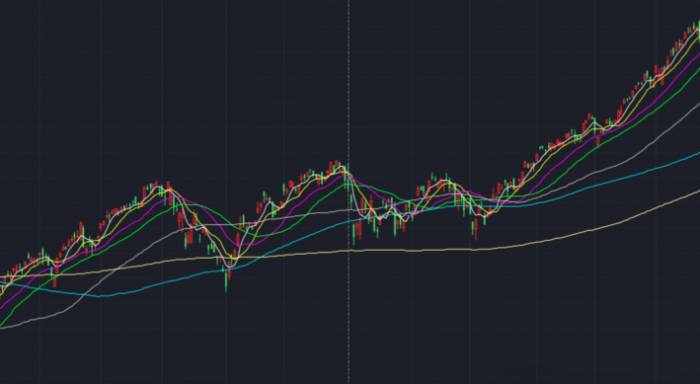
| 2. The Technical/Support-Based Exit | Use price charts to identify logical exit points. Sell when the stock breaks below a key moving average (like the 50-day) or a major trendline it has respected. | Traders, technically-inclined investors. Removes emotion by following price action. | Requires monitoring. Can trigger sells during normal pullbacks (whipsaws). |
| 3. The Fundamental Re-evaluation Sell | Regularly reassess the "why" you bought. Sell when: the story changes (product fails), valuation becomes extreme (P/E far above historical average), or a better opportunity arises. | Long-term investors, value-oriented approaches. Focuses on business quality, not just price. | Subjective. Requires deep understanding of the company. |
I personally blend #1 and #3. For a growth stock, I might set a scale-out plan. But every quarter, I ask: "Is the reason I bought this company still true?" If the fundamentals deteriorate, I sell regardless of the price target.
Let's Run a Real Scenario: "TechGrow Inc."
You buy 120 shares of TechGrow at $50 per share ($6,000 investment). You're bullish long-term but know it's volatile.
Your Scale-Out Plan:
- Target 1 (+25%): Sell 40 shares at $62.50. You bank $2,500, recovering your initial cost basis on those shares plus a $500 profit. Your remaining cost basis for the held shares drops dramatically.
- Target 2 (+50%): Sell another 40 shares at $75. You bank $3,000. You've now locked in $1,500 total profit and have 40 "free" shares riding.
- Final 40 shares: You place a trailing stop-loss order 15% below the market price. If it rises to $90, the stop moves to $76.50. If it drops 15% from any peak, you're sold out, protecting a large portion of the remaining gains.
This isn't theoretical. It's a checklist. You execute at the prices, no debate.
How Do You Actually Execute a Profit-Taking Plan?
Knowing a strategy is one thing. Making it happen is another. Here's the operational playbook.
Step 1: Write It Down Before You Buy. This is non-negotiable. In your investment journal or notes app, record:
- Investment Thesis: Why are you buying? (e.g., "New product launch expected to double sales in 18 months").
- Profit-Taking Trigger: What event or price will cause you to sell all or part? (e.g., "Sell 50% if stock hits $120, re-evaluate fundamentals after product launch results").
- Loss-Cut Trigger: When will you admit you're wrong and sell? (e.g., "Sell if price falls 15% below my entry or if product launch is delayed by more than 6 months").
Step 2: Use Limit Orders, Not Market Orders. When your target is hit, don't just hit "sell." Place a limit order at your target price or slightly below. This ensures you get the price you want, especially in fast-moving markets. For the final "runner" portion, use a trailing stop order (a good-offer feature with most brokers). It automates the hardest part: letting profits run while protecting them.
Step 3: Schedule Quarterly Reviews. Put a recurring calendar event. For each holding, review your original thesis against recent earnings reports (from SEC EDGAR), news, and industry trends. Has anything fundamentally changed? If yes, it might be time to sell, even if you haven't hit a price target.
Common Mistakes That Wipe Out Profits (And How to Avoid Them)
I've made these. You probably will too. Knowing them in advance helps.
Mistake 1: Moving the Goalpost Up (Greed). Stock hits your 30% target. "But it's still going up! I'll sell at 40%." Then it reverses at 35%. You end up selling at 10% or worse. Fix: Your first target is sacred. Sell the predetermined portion. If you're still bullish, you can use a portion of the profits to re-enter later with a new plan, but honor the first plan.
Mistake 2: Letting a Winner Turn into a Loser. This is the cardinal sin. You have a 60% gain, but no stop-loss. The company misses earnings, and the stock gaps down 40% overnight. Now you're only up 20%, paralyzed, hoping it recovers. It often doesn't. Fix: Always move your stop-loss up (or use a trailing stop) as the price rises. Never let a significant unrealized gain completely evaporate.
Mistake 3: Tax Tail Wagging the Investment Dog. "I can't sell now, I'll have to pay short-term capital gains tax!" So you hold for over a year, and the stock drops 25%. You saved 10-20% in tax but lost 25% in principal. Fix: Taxes are a cost of doing profitable business. Never let tax considerations override a sound sell decision. Paying tax means you made money. That's a good problem.
Your Profit-Taking Questions, Answered
Taking profit is the final, crucial link in the investment chain. It's where paper gains become real wealth. It requires more discipline than buying. By adopting a business-like mindset, choosing a clear strategy, and automating the process where possible, you turn the most emotionally fraught part of investing into a simple, repeatable checklist. Start with your next trade. Write down the exit plan before you click "buy." You'll sleep better, and your portfolio will thank you.




Leave a Comment