Quick jump to what matters
I still remember the first cluster I bought at a dusty gem show in Tucson — a “pristine” amethyst piece that looked like a bargain. Turned out half the points were held on with clear glue. That mistake cost me $60 and taught me a lesson: understanding what a crystal cluster is goes way beyond a dictionary definition. A crystal cluster is a group of crystals that grew together from a shared base or matrix. Multiple points, one mineral family, grown in the same chemical soup. Simple. But that shared base is where all the confusion, pricing traps, and identification headaches live.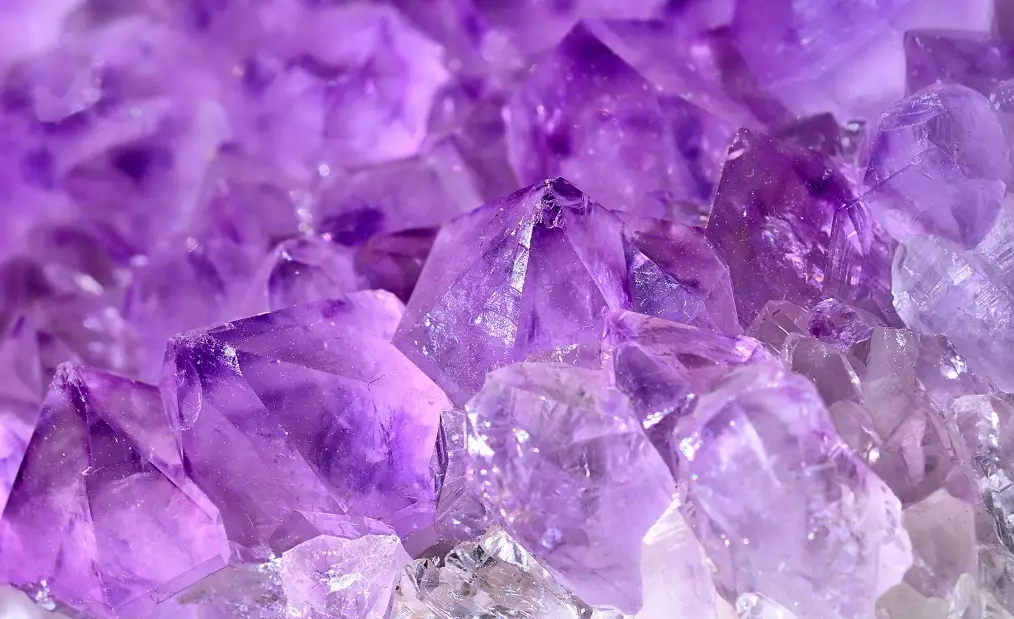
What a crystal cluster actually is (and isn't)
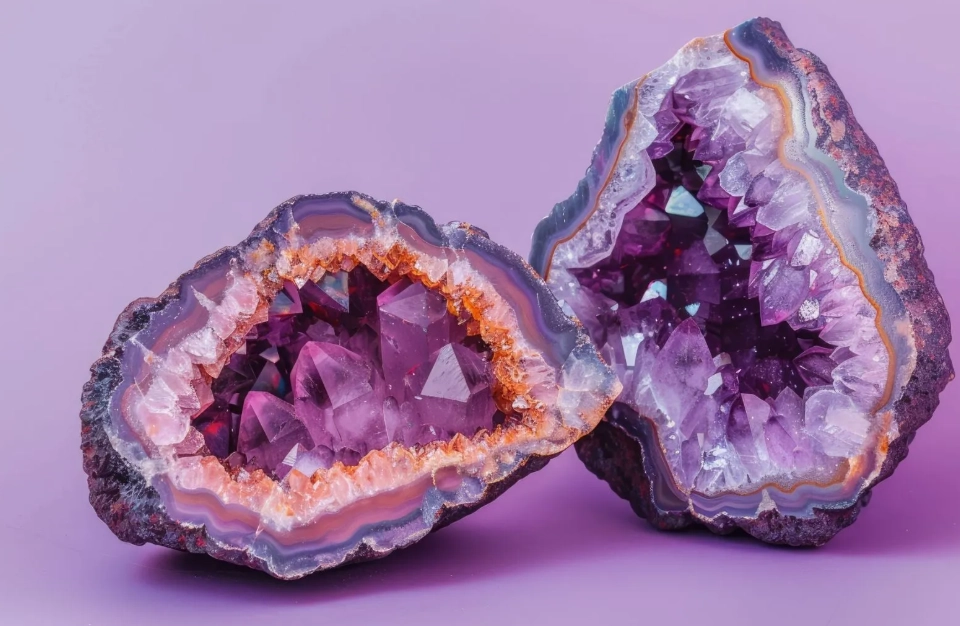
The term “crystal cluster” gets thrown around loosely. A true cluster forms when several crystal points nucleate on a common matrix and grow outward. Think of amethyst points radiating from a geodesic cavity. They share the same host rock. They grew together, not glued later.
What's not a cluster? A specimen where individual points were broken off and then re-attached. Or a single large point with smaller ones “enhanced” by a dealer with a tube of epoxy. Those are composites, not natural clusters.
Here's the subtle point most guides miss: clusters don't have to be big showstoppers. A 1-inch cluster of clear quartz points on a tiny matrix is still a cluster. Size doesn't define it. The shared growth base does.
How to tell real clusters from glued junk
Walk through any tourist shop in Sedona or a weekend flea market and you'll see them: clusters that look too perfect. Points standing up like soldiers. No broken tips. No matrix damage. Those are often assembled pieces.
What do I check first? The bases where points meet the matrix. A real cluster has continuity — the crystal grows out of the rock. You can usually see the transition zone. Glued pieces show a thin, glossy line at the join. Sometimes you'll see clear residue. A jeweler's loupe helps here.
Second check: tip condition. Natural clusters take a beating over millions of years. Broken tips are normal. A cluster with every single point intact is rare and should cost accordingly. If the price is cheap and the condition is flawless, I walk away.
| What I look for | Real cluster | Repaired or glued piece |
|---|---|---|
| Matrix connection | Points grow out of host rock | Visible glue line or smooth base |
| Tip condition | Some broken or chipped tips expected | Every tip perfect, suspiciously uniform |
| Weight feel | Heavy for its size due to matrix density | Lighter than expected |
| Price vs. perfection | You're paying for quality, but with natural flaws | Suspiciously cheap for flawless appearance |
Why two clusters cost $20 and $200
I've seen similar-looking amethyst clusters priced $25 and $180 on the same table. The difference isn't random. Several factors drive price:
Color saturation and evenness. Deep, even purple amethyst from certain mines (I'm thinking of specific pockets in Uruguay and Zambia) commands way more than pale, patchy material.
Matrix aesthetics. A cluster on beautiful host rock that looks like a miniature landscape — what dealers call “matrix appeal” — adds value. A cluster sitting on a boring gray base doesn't.
Damage. Broken tips near the front face kill the price. Damage on the back matters less. I once bought a $140 cluster with a chipped back point for $55 because the dealer knew the front was clean.
Local mine reputation. Specimens from famous localities carry a provenance premium. If you can trace a cluster to a well-known pocket, expect higher prices — and higher resale interest among serious collectors.
What dealers won't tell you
Many “cluster” pieces on the market have been washed with oxalic acid to brighten the surface. It's common and not necessarily fraudulent — but it can dull the crystal over years. Ask directly whether the specimen was acid-treated. Ethical sellers will tell you.
Display and care that won't ruin it
Crystal clusters aren't indestructible. I've seen people destroy clusters by placing them on a sunny windowsill “to be admired.” Sunlight can fade certain colored crystals over time — amethyst is notorious for this. If fading matters to you (and it should if you paid for color), keep clusters out of direct sunlight.
Dusting is another trap. People use feather dusters and push dust into the crevices. My approach: a soft toothbrush, gentle pressure, and a quick rinse with distilled water if the cluster is water-safe. Not all are. Selenite clusters will partially dissolve. Calcite can get cloudy. Quartz? Fine with a quick rinse.
Cleaning with vinegar? Don't. Acids can damage mineral surfaces. I learned that one the hard way on a beautiful fluorite cluster that lost its surface shine. No lasting damage physically, but the display value dropped.
- Keep out of direct sunlight (especially amethyst, citrine, and fluorite).
- Dust with a soft toothbrush, never a feather duster.
- Only rinse water-safe minerals with distilled water.
- Avoid chemical cleaners — acid is the enemy.
- Store in a cabinet or on a shelf with gentle lighting.
- Handle by the matrix base, not the crystal points.
Leave a Comment