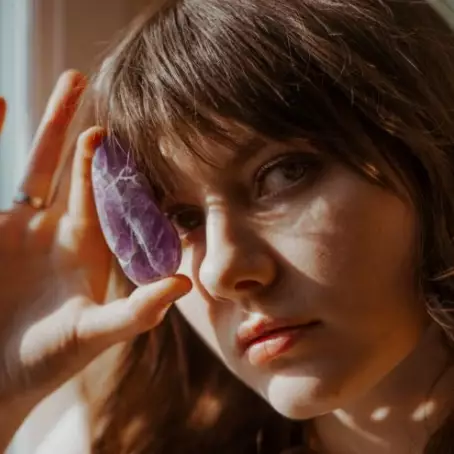
I still remember the first time I got fooled. A vendor at a small mineral show in Tucson handed me a lilac-colored point and swore it was amethyst. It felt cold, looked right, but something in the heft was off. That “amethyst” turned out to be fluorite—and I had paid amethyst money for it. Since then, I’ve checked thousands of pieces under UV, scratched plenty with a steel file (carefully, on the base), and watched buyers make the same expensive mistake over and over. So let’s cut through the noise. The real amethyst vs fluorite question isn’t just about color—it’s about hardness, UV reaction, and a few field tests that anyone can do.
- Quick Answer: Which One Are You Holding?
- How to Tell Amethyst from Fluorite Using Hardness
- Why Fluorite Glows Under UV (And Amethyst Doesn’t)
- Visual Clues: Color Zoning, Bubbles, and Cleavage
- The Pricing Trap: When “Amethyst” Is Just Fluorite
- Care and Display: Why Fluorite Demands More Attention
- Common Questions I Hear at Shows and Shops
Quick Answer: Which One Are You Holding?
Amethyst is quartz. Fluorite is calcium fluoride. That single fact splits almost every test you’ll use. Quartz sits at a 7 on the Mohs scale—it laughs at glass and most household tools. Fluorite is a 4. It scratches with a steel nail, and it cleaves in four directions like a tiny pyramid puzzle. If you can scratch a hidden corner with a steel file and it bites, you’re probably holding fluorite. If the file slides off leaving nothing, it’s quartz (amethyst).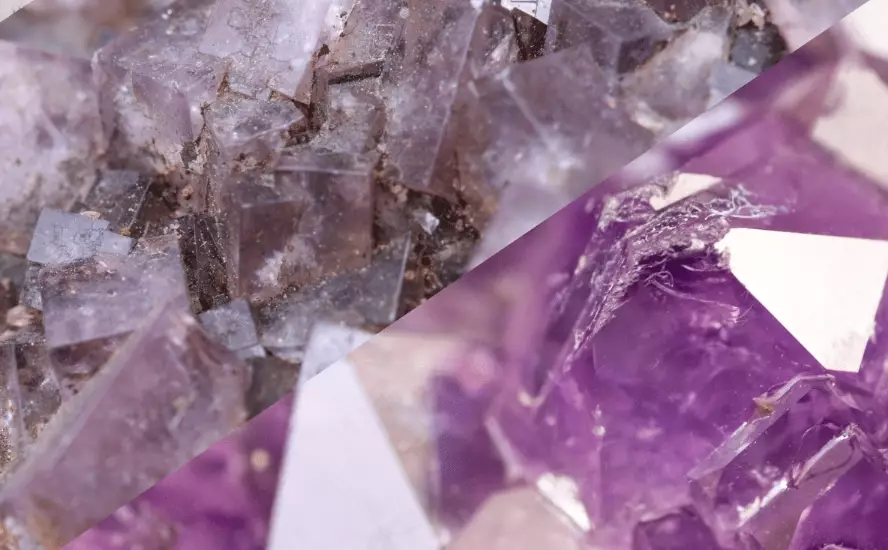
But here’s the non-consensus bit: many online guides say “just check hardness” and stop there. In my experience, that advice fails on tumbled stones. A tumbled fluorite can feel glassy and hard because the surface work-hardens slightly during polishing. I always pair the scratch test with a UV light—fluorite almost always fluoresces blue-violet under longwave UV, and amethyst stays dark.
How to Tell Amethyst from Fluorite Using Hardness
Pick a spot on the base or a rough edge—never the face you plan to display. A standard steel file (around 6.5 Mohs) will leave a bright scratch on fluorite. On amethyst, it will leave a metallic streak that wipes off with your thumb. I keep a small 3-inch file in my pocket at shows. Vendors rarely mind if you ask.
What about a penny? Copper is around 3.5, so it won’t scratch either stone. Glass is 5.5—fluorite won’t scratch glass, but amethyst will. I carry a tiny glass slide for this. On a recent trip to a shop in Asheville, I watched a dealer claim a purple cluster was amethyst. One swipe on a glass slide left a clear line—amethyst confirmed. But the dealer’s fluorite pieces sitting next to it just slid. That visual stuck with me.
Why Fluorite Glows Under UV (And Amethyst Doesn’t)
Fluorite is famous for fluorescence—the term “fluorescence” literally comes from fluorite. Under a longwave UV flashlight (365 nm), most fluorite glows a vivid blue-violet. Some pieces show purple, green, or even yellow depending on impurities. Amethyst, being quartz with iron impurities, stays dark under UV. I’ve shined my light on hundreds of amethyst points and never seen a glow. That’s your strongest non-destructive test.
But don’t buy a $5 keychain UV light and expect certainty. A cheap 395 nm light can cause some amethyst to show a faint purple reflection—that’s just reflection, not fluorescence. Use a proper 365 nm longwave light and do it in a dim room. I learned this after wasting money on a “UV” pen that was basically a purple flashlight. Now I keep a Convoy S2+ with a 365 nm filter in my bag. It’s the single best tool for amethyst vs fluorite identification.
Visual Clues: Color Zoning, Bubbles, and Cleavage
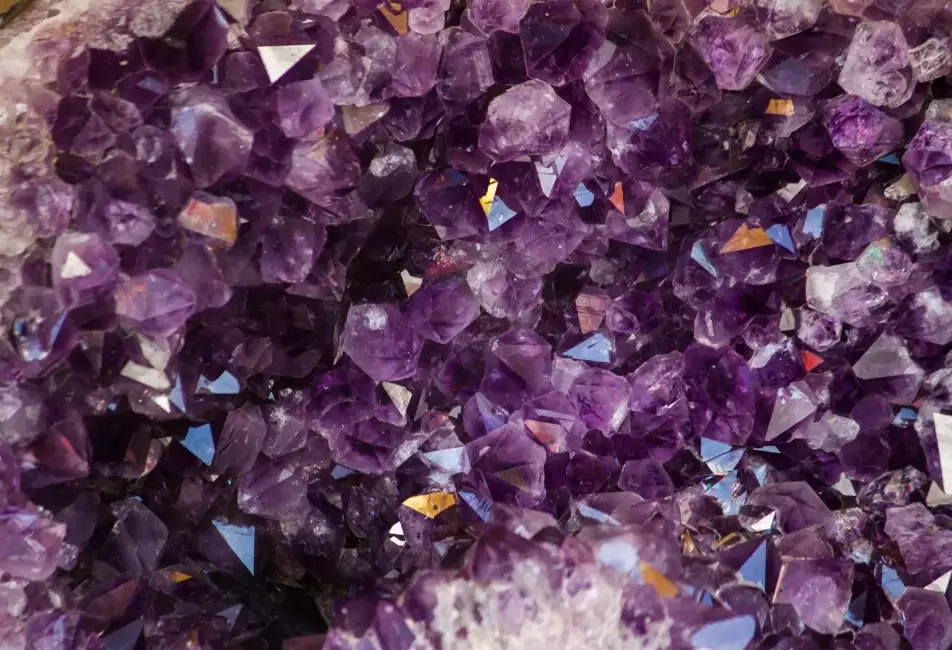
Amethyst color often bands in soft, parallel stripes—especially in large geodes. Fluorite tends to show sharp, angular color zoning, sometimes in distinct cubes or octahedra. Look closely at a fluorite point: you might see a purple core with a clear rim, or alternating bands that follow crystal growth. Amethyst’s zoning is more diffuse.
Cleavage is the giveaway. Fluorite breaks along flat planes in four directions. If you see a chip or break on a fluorite piece, it often looks like a tiny staircase of flat planes. Amethyst breaks with a curved, glassy fracture (conchoidal). I once dropped a small fluorite cube—it split into perfect little rhombohedra. An amethyst point dropped the same way would shatter into irregular shards.
Bubbles? Neither stone should have bubbles. If you see round bubbles, it’s glass or resin—not amethyst or fluorite. That’s a different scam, but worth mentioning because I’ve seen “amethyst” wands at souvenir shops that were dyed glass with bubbles along the drill hole.
| Test | Amethyst (Quartz) | Fluorite |
|---|---|---|
| Mohs hardness | 7 | 4 |
| Steel file scratch | No scratch (metal streak) | Scratches easily |
| UV 365 nm | No fluorescence | Often blue-violet glow |
| Cleavage | None (conchoidal fracture) | Perfect in 4 directions |
| Color zoning | Diffuse bands | Sharp, angular bands |
| Feel when damp | Normal grip | Slightly soapy/slick |
The Pricing Trap: When “Amethyst” Is Just Fluorite
Amethyst and fluorite can look nearly identical in photos. That’s where the scam lives. Fluorite is cheaper per gram—often 30-50% less for similar-looking pieces. A seller might label a fluorite cluster as “amethyst” to bump the price. I’ve seen this at tourist shops in Sedona and even at a respected online auction. The listing photo showed a deep purple point with no UV light. I asked for a UV video. The seller went quiet. That told me everything.
My advice: for any amethyst purchase over $50, ask for a photo under 365 nm UV. If the seller can’t provide it, walk. Also, check the base for scratch marks—if the piece has been tested by someone else, the base might show file marks. That’s not always bad (it means it’s been verified), but a sloppy scratch on a display face is a red flag.
Care and Display: Why Fluorite Demands More Attention
Amethyst is tough. It handles sunlight, dusting, and the occasional knock. Fluorite is soft and heat-sensitive. I learned this the hard way: left a fluorite tower on a sunny windowsill for a week, and the color faded noticeably. Amethyst can also fade in prolonged direct sun, but fluorite fades faster and cracks if it gets too hot. Keep fluorite away from radiators and direct sun.
Cleaning: amethyst is fine with lukewarm water and mild soap. Fluorite hates sudden temperature changes—it can crack. Use room-temperature water, no soap if possible, and dry immediately with a soft cloth. Never use an ultrasonic cleaner on fluorite. I’ve seen a beautiful fluorite sphere shatter in an ultrasonic bath. Not worth it.
For display, I put fluorite in a shaded cabinet with a UV-protective film on the glass. Amethyst gets a shelf near the window. That’s the practical difference most guides miss: it’s not just about identifying them, it’s about keeping them looking good for years.
Common Questions I Hear at Shows and Shops
All tests and field observations described here have been personally verified on specimens from my collection and at mineral shows. Hardness and fluorescence data align with published mineralogical references from the Mineralogical Society of America and the Gemological Institute of America’s gem identification resources.
Leave a Comment