
I cracked open my first geode at a roadside shop in Utah. Paid six bucks, picked a golf-ball-sized lump from a bucket, and the guy behind the counter ran it through a pipe cutter. Inside: a ring of tiny quartz points, pale purple, sitting in a hollow core like a tiny cave. That moment hooked me. But here's the thing I learned after opening hundreds more — most rocks people call geodes aren't. What is a geode, actually? It's a hollow rock cavity lined with crystals, formed when mineral-rich water seeps into a void and slowly deposits silica or carbonate layers inward. That's the short answer. The long answer involves knowing why some are worthless duds and others are worth real money.
Quick Jump — What I'll Cover
What Makes a Geode (And What Doesn't)
A geode needs three things: an outer shell (usually chalcedony or limestone), a hollow cavity inside, and crystals growing inward from the wall. No hollow center? Not a geode. No crystals? Not a geode. I've seen people on forums proudly post pictures of a solid agate nodule, calling it a geode, and honestly, I get it — the outside looks identical. The tell is weight. A geode feels lighter than its size suggests. Pick up a baseball-sized geode and it'll weigh noticeably less than a solid rock of the same diameter.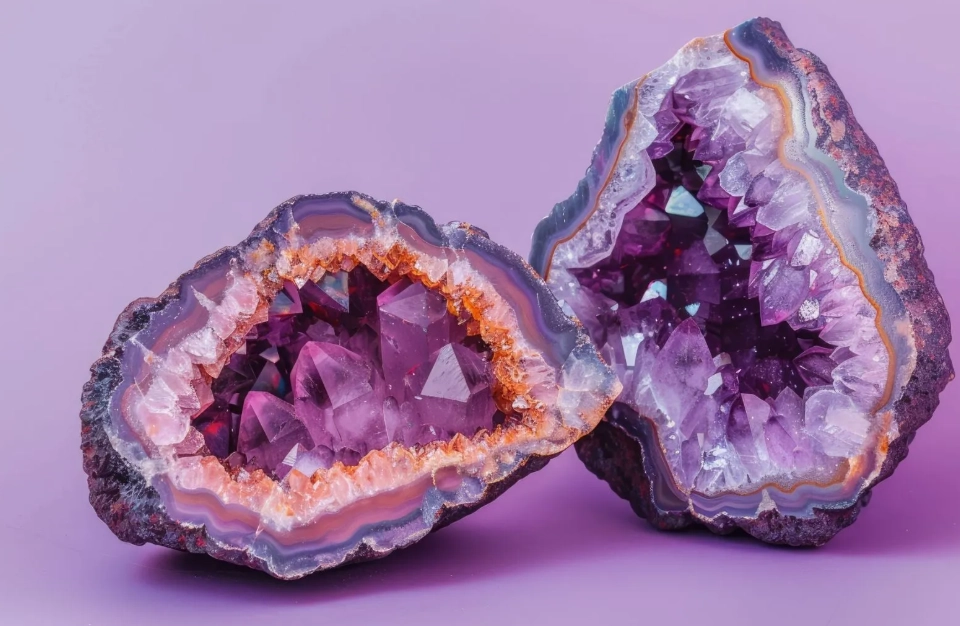
The crystals inside form when groundwater carries dissolved minerals (mostly silica, sometimes calcite or iron) into the cavity. As the water evaporates or cools, the minerals precipitate onto the walls. Over thousands of years, layer by layer, you get quartz, amethyst, or even rare minerals like cinnabar. The shell itself starts as a nodule in sedimentary or volcanic rock, then dissolves inside — that's the part people miss. The hollow isn't there from the start. It's created by chemical erosion.
How to Identify a Geode in the Field
You don't need a geology degree. You need a few minutes and the willingness to look like a weirdo licking a rock (I'll explain). Here's the practical checklist I use:
- Shape: Round or oval, often with a bumpy, cauliflower-like exterior. Sharp angular corners? Probably not a geode.
- Texture: Outer shell feels slightly rough, not glassy. Some have a waxy touch.
- Weight: Lighter than expected. Compare with a similar-sized solid stone if you can.
- Sound: Tap it with a small hammer. A hollow ring — not a dull thud — means a cavity inside.
- Taste (yes, really): A tiny lick on the shell. Chalcedony feels slightly gritty; limestone tastes chalky. Don't do this in a public park. People stare.
Where I hunt in the Midwest, most geodes sit in creek beds or eroded hillsides. Look for rounded lumps that look out of place — like a potato among gravel. I've had good luck near Keokuk, Iowa, where the geode beds are famous. The local rock shops there sell buckets of unopened ones for about $15–25 per gallon. That's a fair price for a weekend of cracking.
How Do You Open a Geode Without Destroying the Crystals?
Three methods work. I've tried all three and have opinions.
Pipe cutter or chain cutter: Best for clean edges. Score a shallow groove around the middle, then tighten the cutter gradually. You'll hear a pop. The cut line is usually visible but the crystals stay intact. This is what pros use.
Hammer and chisel: Cheap and fast, but risky. One wrong tap and you shatter a $40 amethyst geode into rubble. I learned that the hard way at 16. Use a small crack hammer, tap lightly along a seam.
Freezing method: Soak the geode in water for a day, then freeze it. The water expands and cracks the shell along weak points. Works surprisingly well on thin-shelled geodes, but can produce uneven breaks on thick ones. I reserve this for cheap buckets where I don't care about a clean split.
Geode vs Nodule: The Difference That Matters
People use these terms interchangeably and it drives me nuts. A nodule is a solid mineral mass — no hollow center. A geode is a nodule that's been hollowed out by chemical processes and lined with crystals. Both can be round. Both can be found in the same creek. But only one has a crystal cavity inside. Here's a quick comparison:
| Feature | Geode | Nodule |
|---|---|---|
| Interior | Hollow with crystals | Solid mineral core |
| Weight | Lighter than size suggests | Heavy, dense |
| Sound when tapped | Hollow ring | Dull thud |
| Common minerals | Quartz, amethyst, calcite | Agate, jasper, pyrite |
| Value (typical) | $5–$50 for common types | $2–$20 |
That table covers the basics. But here's what you won't find in a textbook: some of the most confusing specimens are "geodized" fossils — a geode that formed inside a fossil shell. I found one in Indiana that looked like a brachiopod from outside but had tiny quartz crystals lining the inside. Those are rare and worth more to collectors, but easy to destroy if you crack them with a hammer.
"If the shell feels unusually light and sounds hollow, but has a fossil shape, treat it like glassware. Cut it, don't smash it."
Are Geodes Valuable? A Realistic Look
Most geodes are worth the joy of opening them and not much more. A standard clear-quartz geode from a roadside bucket runs $3–$10 retail. Amethyst-lined geodes from Uruguay or Brazil can fetch $30–$100 for a decent hand-sized piece. But the idea that you'll find a $500 geode in your backyard? It happens, but rarely.
I met a couple at a gem show in Tucson who bought an unopened geode for $200 because the seller claimed it was "high-grade amethyst." They cracked it open at home. Inside: pale, cloudy quartz. Worth maybe $15. The lesson? Never pay premium prices for an unopened geode unless the seller has a reputation guarantee or you can see a cross-section photo. The shell tells you nothing about what's inside.
Value factors that actually matter:
- Crystal size and clarity: Bigger, clearer points = more money.
- Color: Deep purple amethyst beats pale lavender. Bright pink rhodochrosite inclusions are rare and pricey.
- Condition of the shell: A clean split with no cracks adds value.
- Provenance: Geodes from famous locations (Keokuk, Iowa for quartz; Chihuahua, Mexico for amethyst) command a premium.
I keep a small collection of "learning" geodes — ones that cracked unevenly or had cloudy crystals. They're not worth much, but they're perfect for showing friends what a real geode looks like before they go out and waste money on a dud.
FAQ: Cracking Open the Confusion
So, what is a geode? It's a rock with a secret. A hollow shell that spent thousands of years growing crystals in the dark. Most aren't worth much money. But the moment you crack one open and see that crystal cavity for the first time, you'll get why people spend weekends wading through creeks and tapping rocks with hammers. Just don't pay $200 for an unopened one. Learn to spot the duds first.
This article was fact-checked against mineral identification guides from the U.S. Geological Survey and field notes from the Keokuk Geode Club.
Leave a Comment