Quick Field Map
I got burned on a “natural citrine” point at a gem show in 2019. The color was too even, the base was too smooth. It was heat-treated amethyst, and I paid triple. That day pushed me to learn how to identify crystals with real field tests, not Instagram captions. These are the checks I now run at shops, Gem Faire, and estate sales—before I hand over cash.
What Does “Identifying a Crystal” Actually Mean?
Most people mean three separate things. First, “Is this a mineral or glass?” Second, “Which mineral is it?” Third, “Is the color real or treated?” Those are different jobs. A quartz point can be 100% quartz and still have a fake color coating. Learning how to identify crystals works best when you stop chasing a name and start reading physical evidence.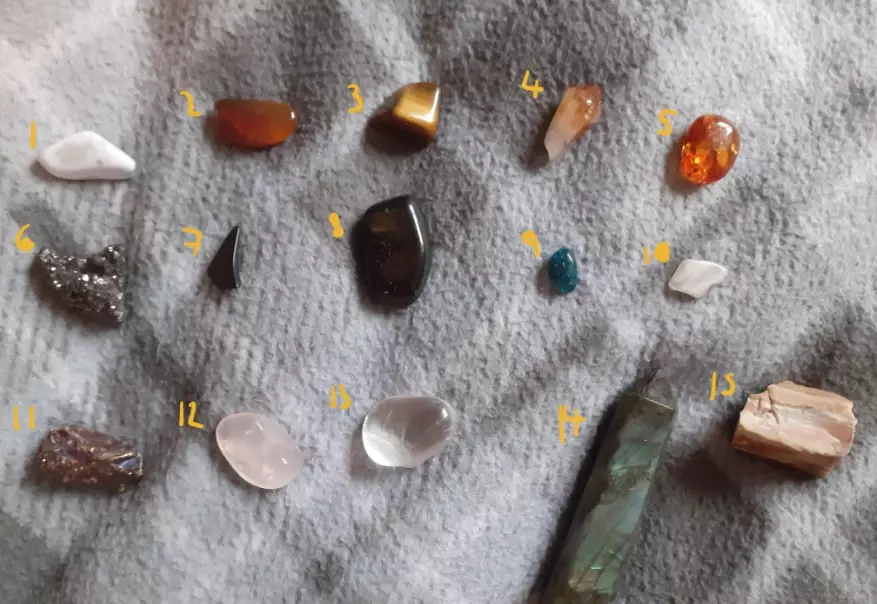
The 7 Field Tests for How to Identify Crystals
You do not need a lab. You need a steel file, a white tile, a small magnet, and 10 minutes. I keep all of it in a zipper pouch that cost me $11.
1Hardness: Scratch Before You Trust
Quartz scratches glass; glass does not scratch quartz. Rub a hidden spot of the piece against a glass bottle. If the mineral leaves a scratch, it is likely quartz-family or harder. If nothing happens, it may be glass, calcite, or resin. The Mohs hardness scale from the Mineralogical Society of America is the reference I use—quartz sits at 7, glass around 5.5.
2Streak Test: The Ugly Truth on a Tile
Drag the specimen across unglazed porcelain. Hematite leaves red-brown; pyrite leaves greenish-black. A quartz piece leaves white or no streak. Sellers sometimes dislike this test, so I ask first. If someone refuses, walk.
3Heft and Temperature Check
Real quartz feels cold on your lip and heavy for its size. Glass warms up fast. Resin feels almost warm and too light. Hold a known quartz point in one hand and the candidate in the other. Your palm catches the difference in seconds.
4Break the “Too Perfect” Look
Natural quartz has tiny bubbles, growth marks, and uneven color. Glass has round air bubbles under magnification. Lab-grown quartz has a flawless, watery look that reads as too clean. A 10x jeweler’s loupe is enough. I found a “natural smoky quartz” tower with a perfect machine-polished base and a visible flux-grown seam—that one stayed on the table.
5Birefringence and Double Image
Put calcite or clear quartz on a printed line. Calcite shows a doubled line; most quartz does not. This one test sorts a lot of “clear” fakes from real calcite.
6Magnet and Light Tricks
A small magnet sticks to magnetite and sometimes to hematite. Shine a flashlight through the piece: banded agate shows layered translucence; dyed agate shows color pooling in cracks where a dye has settled. Under UV, some stones fluoresce—calcite and fluorite are the common ones.
7Solvent and Heat Spot Test
A cotton swab with acetone on a tiny hidden spot will lift surface dye from a “natural” pink quartz. It should not lift color from a real specimen. If a “clear quartz” point releases a smell like burning plastic, it is resin. Do this on an inconspicuous base only.
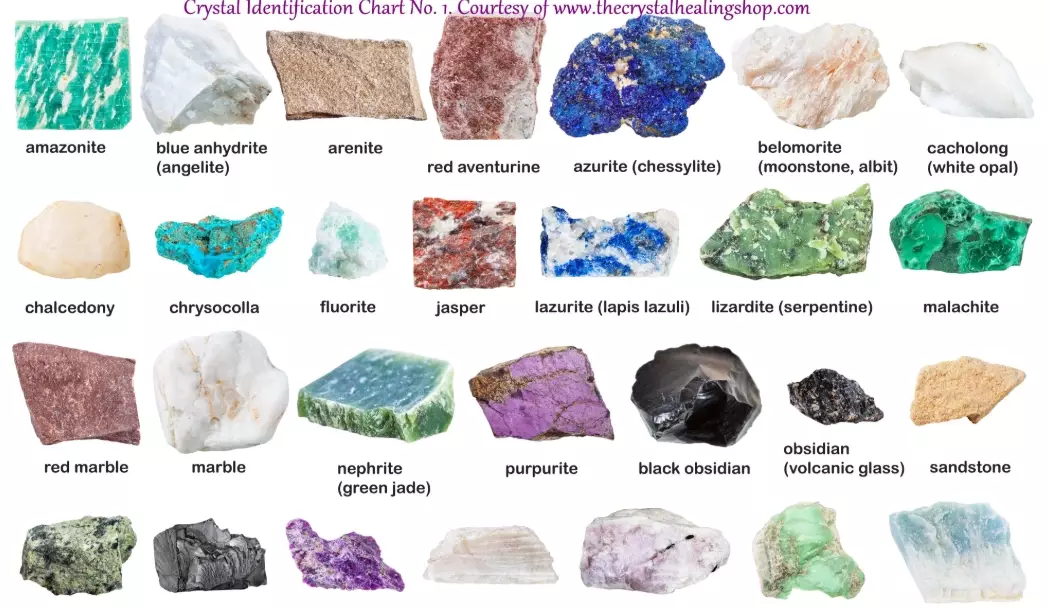
Crystal Identification Chart: What Behave How
| Key test | Quartz | Calcite | Glass | Resin |
|---|---|---|---|---|
| Hardness vs glass | Scratches glass | Does not scratch | Same hardness, no scratch | No scratch |
| Streak | White or none | White | None | None |
| Feel in hand | Cold, heavy | Cool, medium weight | Warms quickly | Warm, light |
| Bubbles | Irregular inclusions | Cleavage lines | Round air bubbles | Round bubbles |
| Doubling | No | Yes | No | No |
| Smell/heat | None | None | None | Plastic smell |
A “crystal identification chart” is a shortcut, not a verdict. Use it to narrow the field, then verify with the steps above.
How Do You Tell If a Crystal Is Real? Red Flags
Most bad buys are not fake stones—they are honest stones with dishonest labels. Watch these:
- Ingrained color in cracks. Dye traps in fractures. A real color is even through the body.
- Perfect symmetry at the base. Hand-cut natural bases vary. A machine-cut flat base suggests treated or grown material.
- “Citrine” that is orange and flawless. Natural citrine is pale smoky-yellow; bright orange usually means heat-treated amethyst.
- Pricing too low for the size. A palm-sized clear quartz point at $8 is suspicious. That price does not cover mining and shipping.
- Refusing to answer questions. A seller who won’t hold the stone under a loupe or let you feel the temperature is hiding something.
Beginner mistake to skip: Trusting the label card. Labels are printed by the seller. Treat the card as a suggestion and the stone as the evidence.
One Market Story That Changed My Buying
I found a seller at a dusty Tucson show with 30 “natural Tibetan quartz” points. I checked two. Hardness fine, streak fine, no bubbles. The third felt warm in my palm. I weighed it in my hand and it was 30 percent lighter than the others. Resin. The seller had mixed real pieces in front and one fake in the back row.
That taught me: test the piece you are buying, not the one in the photo. And never test only one piece from a stacked tray.
“The stone that feels off is the one you don’t buy.” My rule after losing $60 on that trip.
FAQ: Real Questions from Buyers
I’m at a crystal shop with no tools. What is the fastest “is it real” check for how to identify crystals?
Hold it to your lips for 3 seconds. Real quartz stays cold longer than glass or resin. Then check the base for tool marks—machine-cut bases on a “natural” piece are the second-fastest tell. Skip the scratch test unless the seller gives you permission.
How do I tell dyed agate from natural agate in the field?
Dye pools in cracks. Look at the side of the slice with a flashlight at a low angle. A natural agate shows gray-to-white bands; dyed pieces show concentrated color lines exactly at the edges where fractures sit. A cotton swab with acetone on the rim will confirm it.
Is a “crystal identification chart” reliable for untreated vs treated stones?
No. Charts list minerology, not treatment history. Two quartz points can show the same hardness and streak, but one was irradiated to “smoky” color. Ask the seller directly about treatment. A good shop writes “heated” or “dyed” on the tag—if it doesn’t, assume it.
What is the hardest fake to spot without a loupe?
Lab-grown quartz. It passes hardness, streak, and cold-temperature checks. The only reliable signs are a flawless interior and a machined base. If the price is too good for a giant point, the growth method is the likely reason.
This guide was fact-checked against the Mohs hardness scale and standard gemology testing procedures.
Leave a Comment