I still remember the first time I tried to identify a raw stone from a roadside stall in Arizona. The seller swore it was blue lace agate. My chart said otherwise. That little embarrassment taught me something: a crystal identification chart is only as good as the context you bring to it. Most beginners treat these charts like an answer key. They aren't. They are a starting point, and if you use one wrong, you'll end up mislabeling half your collection.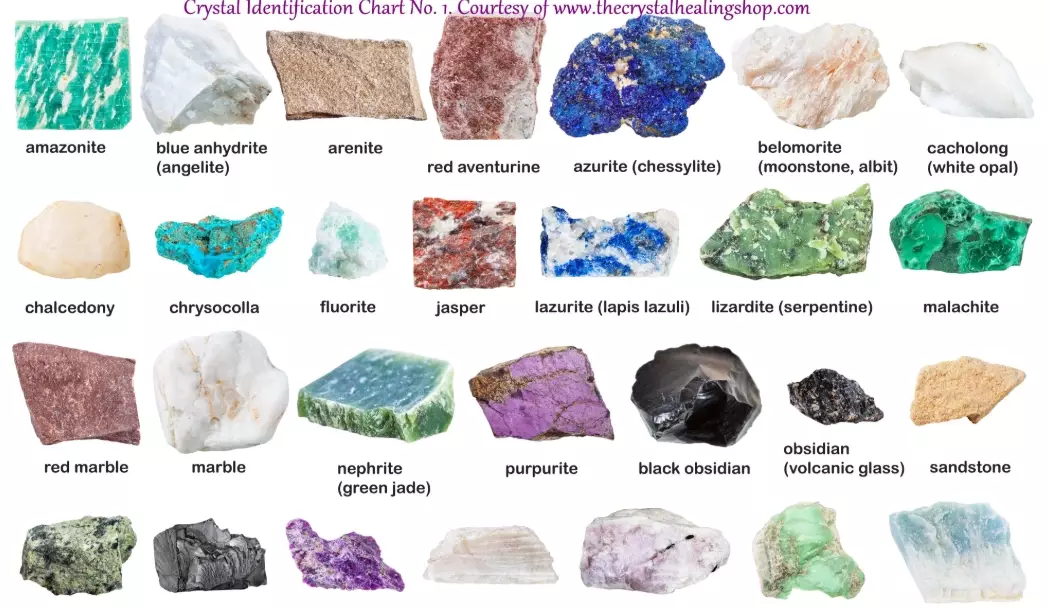
What's Inside This Guide
What Is a Crystal Identification Chart (and What It Can't Do)
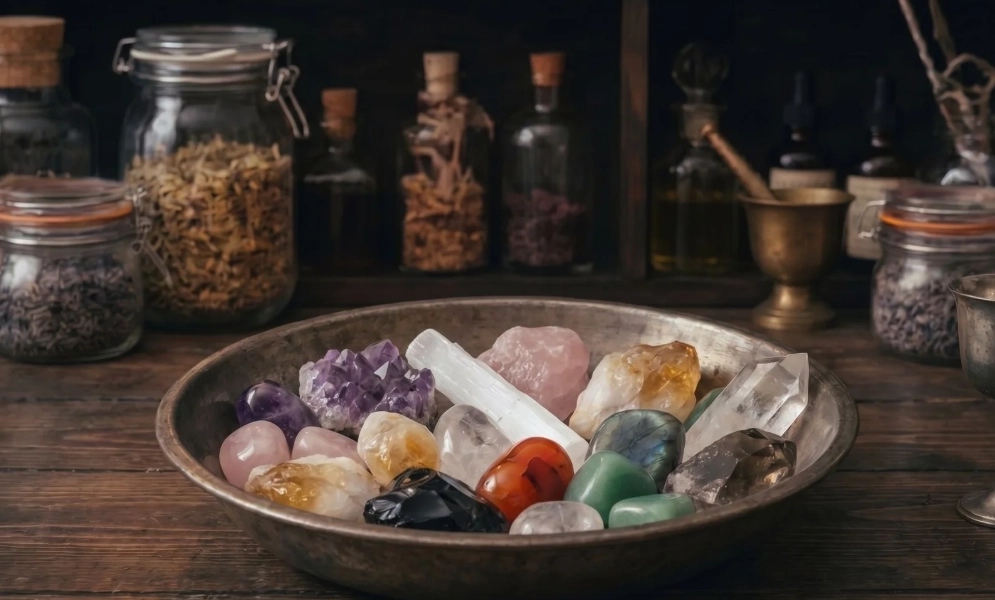
A crystal identification chart is a reference tool that pairs visual traits—color, luster, cleavage, streak—with a stone's name. You'll find them as laminated cards, poster prints, or printable PDFs. I keep a waterproof one from the Gemological Institute of America in my field bag. Their official gem identification resources are a solid starting point (you can find them through GIA's public education pages).
Here's the problem. Most charts show polished stones under studio lighting. Real stones are dusty, fractured, and often look nothing like the photo. A raw amethyst point that's been sitting in a creek for years has a completely different surface than the glossy specimen on the chart. So use the chart to narrow down possibilities, not to confirm a final ID on its own.
How to Use a Crystal Identification Chart Without Fooling Yourself
I trained myself to follow a specific order of operations. Skip a step and your identification is worthless.
Step 1: Check hardness first, always. A chart tells you that quartz scratches glass but calcite doesn't. That single test eliminates dozens of candidates. I use a cheap glass microscope slide—not my phone screen, which I learned the hard way.
Step 2: Look at streak, not color. Hematite looks metallic gray, but its streak is always red-brown. A chart that lists streak color is worth ten that only list outer color.
Step 3: Check cleavage and fracture. Quartz has conchoidal fracture (curved, glass-like breaks). Feldspar has distinct cleavage planes. Your chart should show both.
Step 4: Verify with one more test. I use a simple acid test (vinegar works for calcite) or a UV light for fluorite. Never rely on just the chart and a single test.
Notice I didn't say start with the chart. Start with a physical test, then use the chart to interpret what you found. That reverses the usual advice, but it saves you from confirmation bias—seeing what you want to see on the chart because the color matches.
5 Mistakes I See Beginners Make Every Week
These aren't theoretical. I've watched people make every one of these at gem shows and rock shops.
- Trusting the photo over the physical properties. A chart lists "green" for emerald, but green glass and green tourmaline share that box. Without hardness and refractive index data, you're guessing.
- Ignoring the streak test because it's messy. Yes, it leaves a mark on your porcelain plate. That's the point. The streak is often more diagnostic than color.
- Using a chart meant for polished minerals on raw specimens. Raw stones show crystal habit, cleavage, and matrix—traits that polished stones hide. Find a chart specific to rough specimens if that's what you're identifying.
- Skipping the streak test on dark stones. Black tourmaline looks like black obsidian in photos. Streak color and hardness separate them instantly. I keep a small ceramic tile in my pocket—cheap and effective.
- Forgetting that charts age. New minerals get discovered, trade names change, and what was called "andesine" in a 2005 chart might be treated feldspar today. Cross-check with the International Mineralogical Association's current list of approved mineral names (available through IMA's public database).
My Go-To Mini Chart: 8 Stones and Their Tell-Tale Signs
I've condensed the most common confusing pairs into a table I actually use. A full printable crystal identification chart would have hundreds of entries, but these eight cover 80% of the questions I get from readers.
| Stone | Hardness (Mohs) | Streak | Key Visual Clue | Confused With |
|---|---|---|---|---|
| Quartz | 7 | White | Conchoidal fracture, glassy luster | Glass, calcite |
| Calcite | 3 | White | Perfect rhombohedral cleavage | Quartz, halite |
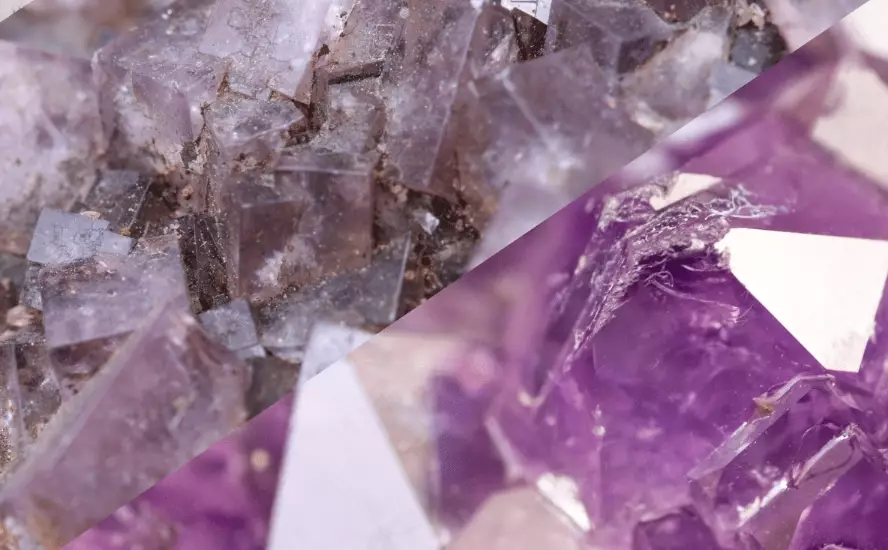
| Fluorite | 4 | White | Octahedral cleavage, often fluorescent | Amethyst, halite |
| Hematite | 5–6 | Red-brown | Metallic luster, heavy feel | Magnetite, goethite |
| Pyrite | 6–6.5 | Greenish-black | Brassy yellow, cubic crystals | Chalcopyrite, gold |
| Feldspar (orthoclase) | 6 | White | Two cleavage planes at 90° | Quartz, beryl |
| Gypsum | 2 | White | Fingernail scratches it | Talc, halite |
| Magnetite | 5.5–6.5 | Black | Strongly magnetic | Hematite, chromite |
Here's a scenario. A reader emailed me a photo of a grayish stone she found near Lake Superior. Her chart said "agate" because of the banding. I asked her to do a streak test. White streak, hardness 7. Agate (chalcedony) has a white streak too, but the fracture was uneven, not conchoidal. Turned out to be a piece of weathered granite. The chart wasn't wrong—she just didn't check the fracture pattern. That's the kind of subtle miss a chart alone will never catch.
Real Questions from Collectors (and Unfiltered Answers)
My crystal identification chart shows a stone as "emerald," but the color looks off. Should I trust the chart or my eyes?
Trust your eyes, then verify with a refractometer. Emerald's refractive index range (1.56–1.60) is narrower than most charts suggest. A green stone with an RI of 1.62 is probably tourmaline or chrome diopside. Charts often oversimplify RI ranges, so look up the specific mineral data from a source like Mindat's mineral database.
Why does my printable crystal identification chart show different hardness values than a geology textbook?
Because hardness varies by direction in some minerals. Kyanite, for example, is 4.5 along one axis and 6.5 along another—a single number on a chart is misleading. For most common stones, though, the chart is close enough. If the chart gives a range (like 5–6 for hematite), that's actually more accurate than a single value. Stick with ranges.
I used a crystal identification chart to label my collection, but a friend says half are wrong. How do I double-check without a lab?
Run a three-test check: streak, hardness, and cleavage. If all three point to the same mineral on your chart, you're probably right. If two out of three conflict, get a second opinion. Local gem and mineral clubs often host free identification days—I've used the one at the Tucson Gem and Mineral Society show for years. Their volunteers catch things no chart will.
Can I identify a crystal by color alone using a chart?
No, and this is the biggest trap. Quartz comes in every color of the rainbow, and so does fluorite. Color tells you what trace elements are present, not what the mineral is. I've seen purple fluorite sold as amethyst at flea markets because the seller only matched colors on a chart. Hardness and cleavage would have caught it in five seconds.
Where can I find a reliable crystal identification chart printable for field use?
The U.S. Geological Survey has a free mineral identification key that's more rigorous than most commercial charts. Print it on waterproof paper (I use a laser printer with synthetic paper). Avoid charts from crystal healing shops—they tend to emphasize metaphysical properties and skip the streak and cleavage data that actually matter for identification.
One last thing. A chart is a tool, not a teacher. The collectors I know who rarely misidentify stones are the ones who practice the physical tests until they're second nature. The chart just confirms what their hands already know. That's the difference between owning a chart and using one.

Leave a Comment