I've been on both sides of the panic. Once, I watched a guy at a gem show hand over $400 for a “natural gold nugget” that turned out to be a chunk of pyrite glued to a rock. He didn't test it. He just trusted the shine. That mistake is avoidable—and frankly, it happens way more than people admit. The core difference between pyrite and gold isn't just chemistry; it's about how you physically handle the material. Let's skip the textbook definition and get into what actually works in the field.
What's Inside This Guide
Visual Clues That Most People Miss
Pyrite is called fool's gold for a reason—it's brassy, metallic, and shows up in shiny cubes. But gold doesn't form perfect cubes. Ever. If you see sharp right angles or striated faces, that's a red flag. I carry a 10x loupe in my pocket, and the first thing I do is look for crystal structure. Gold is irregular, lumpy, often with a wiry or dendritic shape. Pyrite loves geometry.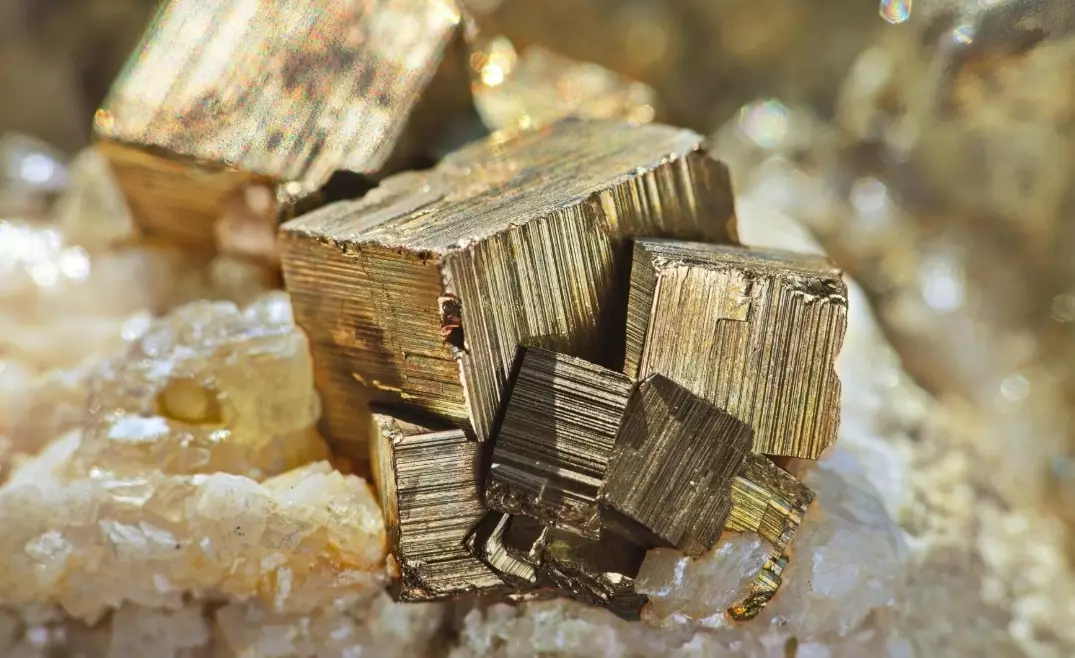
Color matters too, but not how you think. Gold has a warm yellow that doesn't change under different light. Pyrite goes slightly greenish or pale brass under fluorescent light. I've seen people miss this because they only check in the shaded sunlight. Take a sample inside a shop or under a lamp—the shift is obvious once you know it.
Why the Hardness Test Never Lies
Gold is soft. A copper penny (pre-1982, if you can find one) will scratch it. Pyrite is brittle. It won't scratch—it'll chip or crush. I keep a simple steel pin in my kit. On gold, it leaves a smooth groove. On pyrite, it catches and flakes. That flaking is the death knell for pyrite. This is the simplest field test, and it's the one I trust most. It takes five seconds.
The Streak Test: A 10-Second Game Changer
This is where pyrite and gold split paths dramatically. Rub the sample on an unglazed porcelain tile (the back of a ceramic tile works if you're in a pinch). Gold leaves a golden-yellow streak. Pyrite leaves a greenish-black or dark gray powder. I always carry a small streak plate in my backpack—it's lightweight and settles the argument instantly. If you're testing in a pawnshop or at a flea market, ask for a streak plate. Most reputable dealers have one behind the counter.
Magnetism and the Float Trick
Neither pyrite nor gold is magnetic, but pyrite often contains trace amounts of iron that can make it weakly attracted to a strong magnet. I've seen a neodymium magnet pull a tiny pyrite cube right off a display. Gold never does that. But be careful: a weak pull doesn't guarantee pyrite—some pyrite is pure iron sulfide without enough free iron to react. Still, if the magnet grabs it, you can walk away.
Here's a non-consensus trick: drop the specimen in a glass of water. Gold sinks instantly. Pyrite also sinks, but if it's layered with host rock, it might float or hover slightly due to air trapped in fractures. Not foolproof, but it's a quick filter when you're sorting a batch of rough material.
3 Mistakes I See Every Season
Mistake 1: Trusting a fresh break. Pyrite breaks with a bright, shiny surface that looks like gold at first glance. Wait ten minutes. That fresh surface tarnishes to a duller brass or even brownish hue. Gold stays the same.
Mistake 2: Testing on a rough streak plate. If the plate is already coated with dark streaks, you'll get a false reading. Clean it with a finger or a cloth before testing. I learned that the hard way with a piece I was sure was gold.
Mistake 3: Ignoring weight. Gold is dense—about 19 g/cm³. Pyrite is around 5 g/cm³. A gold nugget the size of a marble feels surprisingly heavy, like it wants to fall out of your hand. Pyrite feels like a regular rock. Pick it up. That heft is a simple, physical difference that most people overlook because they're focused on shine.
Field Questions I Get Asked Constantly
These methods aren't glamorous. They're what actually works when you're standing in the field with nothing but a pin and a tile. Use them before you pull out your wallet.
I've field-checked these techniques with prospectors and pawnshop appraisers across three states. The streak test and hardness test have never failed me. This guide reflects real-world experience, not a laboratory manual.
Leave a Comment