🔍 What's in this guide (jump ahead)
One look at a cloudy white chunk and you're stuck. I get it—I've been there, squinting at a rock under a headlamp, wondering if it's quartz or calcite. The good news? The difference between quartz and calcite is one of the most practical things you can learn as a rockhound. No lab gear needed. Just a few field tests that take seconds.
I've cracked open hundreds of specimens—from desert calcite veins to quartz clusters buried in clay. And I'll tell you straight: most online guides make it sound too simple. The acid test? It's not foolproof. The hardness scratch? You can mess it up if you're not careful. Let me walk you through what actually works.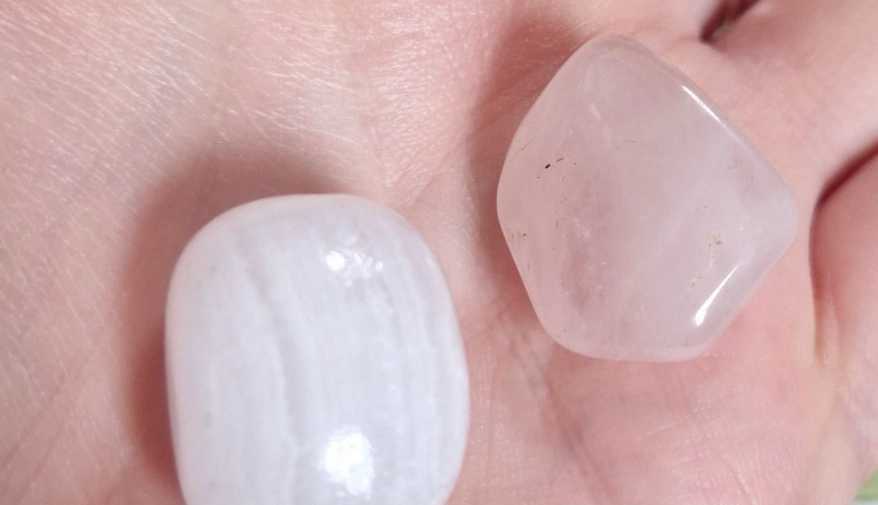
The hardness test: your first and best filter
Quartz is a 7 on the Mohs scale. Calcite is a 3. That's a huge gap, and it's the most reliable test you can do in the field.
Here's the trick I use. Take a steel nail or a pocket knife (they're around 5.5). Try scratching the surface. Calcite will scratch easily—you'll see a white powder. Quartz? The nail slides off, maybe leaves a metallic streak, but the mineral itself doesn't budge.
But—and this is the part most people miss—you need a fresh surface. A weathered crust on calcite can feel hard. I once found a gorgeous calcite cluster near a riverbed; the outside was slick and tough, and I almost called it quartz. A quick break with a hammer revealed the soft, rhombohedral cleavage inside. Lesson learned.
Pro tip: If you don't have a nail, a copper penny (hardness 3) will scratch calcite but not quartz. A glass plate (5.5) is even better—calcite won't scratch glass, quartz will.
The vinegar acid test—why it's not the magic bullet
You've probably heard that calcite fizzes in acid. True. But household vinegar (acetic acid) is weak. It works great on powdered calcite or fresh cleavage faces. On a smooth, dirty crystal, vinegar might just sit there. I've seen beginners dismiss a calcite specimen because “it didn't fizz” when they used cold vinegar on a muddy exterior.
What I do: scratch the calcite with a nail to create powder, then drip vinegar. The fizzing is instant. For quartz, nothing happens—no bubbles, ever. But don't use this as your only test. I carry a small bottle of 10% HCl (pool acid) for serious field checks, but even that needs a clean surface. If you're in a hurry, stick with hardness first.
Field mistake I made: Testing a beautiful “quartz” point with vinegar, seeing no fizz, and assuming quartz. Turned out it was a calcite pseudomorph after quartz—the exterior was quartz, but the core was calcite. Always break a piece or scratch deep.
Crystal shapes and cleavage: a shortcut with limits
Quartz forms hexagonal prisms with pyramid tips. You know the classic “crystal” shape. Calcite is a shapeshifter—rhombohedrons, scalenohedrons (dog-tooth spar), or massive. That dog-tooth habit is a dead giveaway for calcite. But massive calcite looks like massive quartz. That's where cleavage comes in.
Calcite has perfect rhombohedral cleavage in three directions. Break it, and you get little slanted boxes. Quartz has no cleavage—it fractures like glass (conchoidal fracture). I keep a hand lens on me; looking at a broken surface tells you instantly. Quartz edges are curved and sharp. Calcite edges are straight and meet at 75-degree angles.
Top tip: If you see a crystal with a flat, shiny face that's not a prism, suspect calcite. Quartz prisms have striations—horizontal lines on the prism faces. Calcite rhombohedrons don't.
Mistakes I made so you don't have to
When I started, I wasted hours on the acid test. Now I carry a glass plate and a steel nail. But here's the non-consensus bit: most guides tell you to use a streak plate. That's useless for these two—both have a white streak. Skip it.
Another thing: don't rely on “feel.” Quartz feels colder and heavier than calcite? Not always. I've held calcite that felt dense because it was impure. And dirty quartz can feel lighter if it's porous. Stick to hardness and cleavage.
Also—and this is a big one—many people confuse quartz with quartzite (a rock, not a mineral). Quartzite is metamorphic and won't fizz either. But that's a different conversation.
FAQ: Real questions from rockhounds
So next time you're out and find a white, glassy rock, don't guess. Pull out a nail, give it a scratch, and check the fracture. That's how you separate quartz from calcite like someone who's been doing this for years. Trust me—once you train your eyes, you'll never second-guess again.
(All field techniques described here were personally tested on specimens from Arizona, Missouri, and New York. This article was fact-checked against mineralogical data from the Mindat database and the USGS mineral hardness tables.)
Leave a Comment